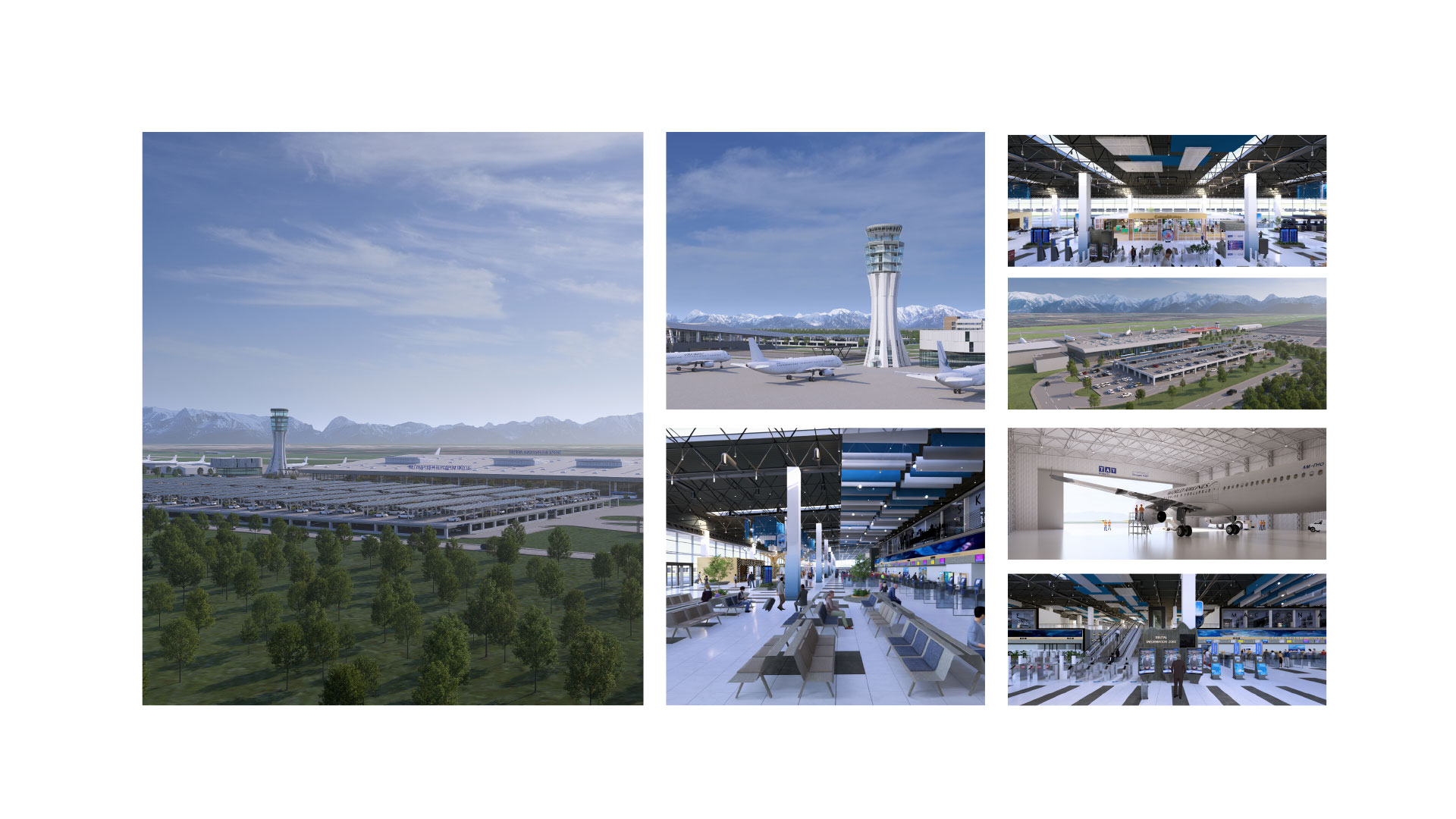
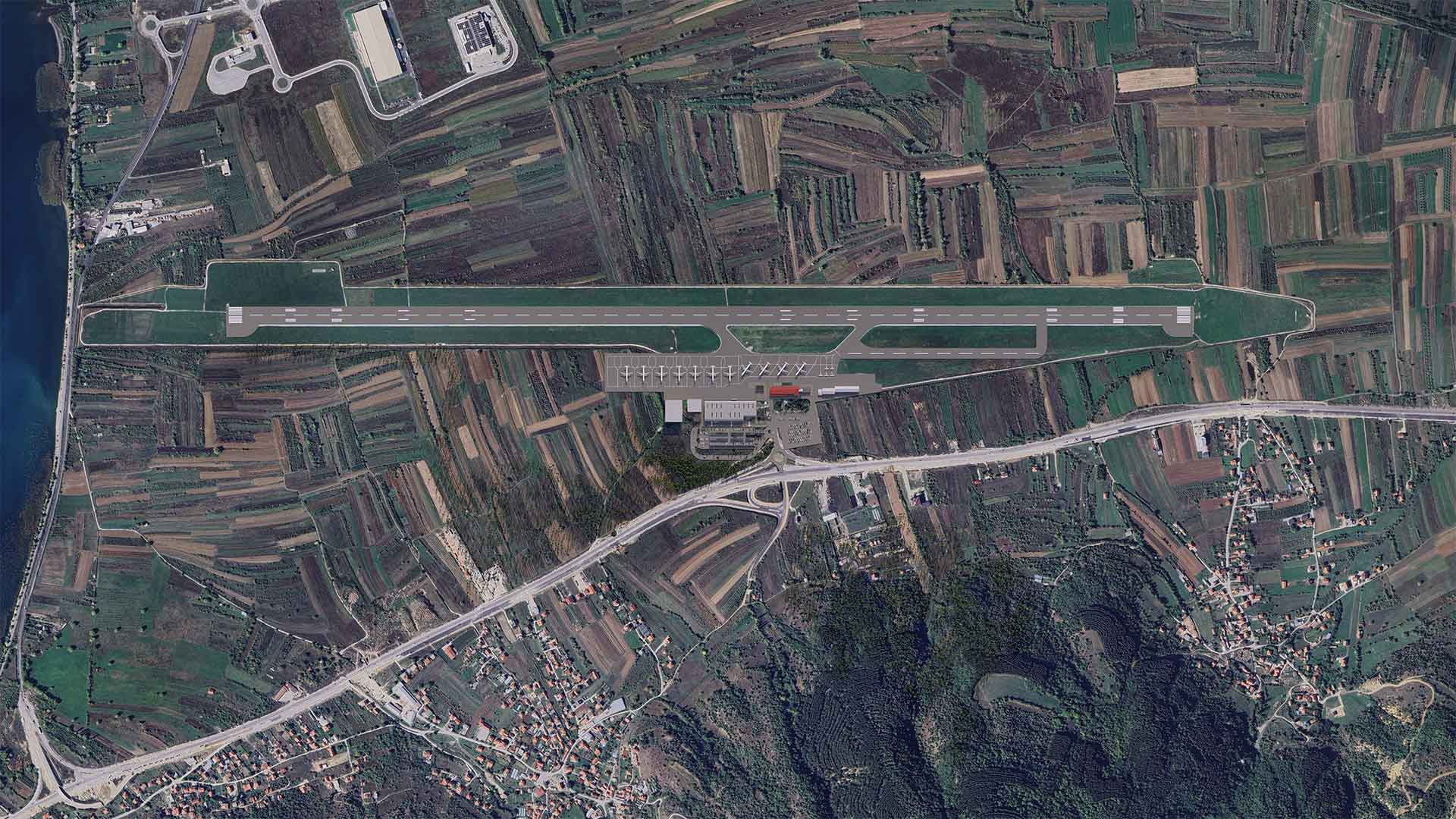
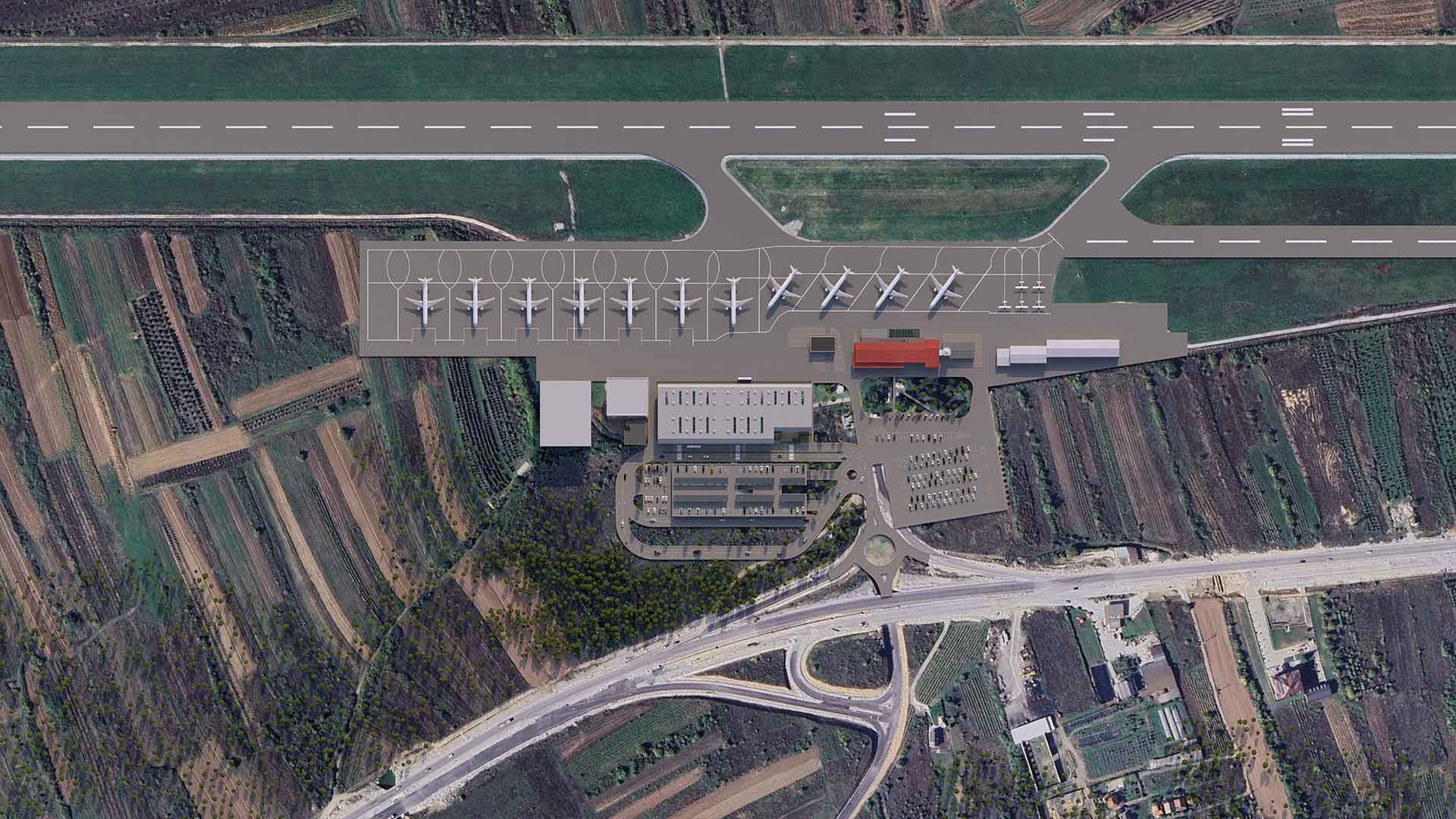
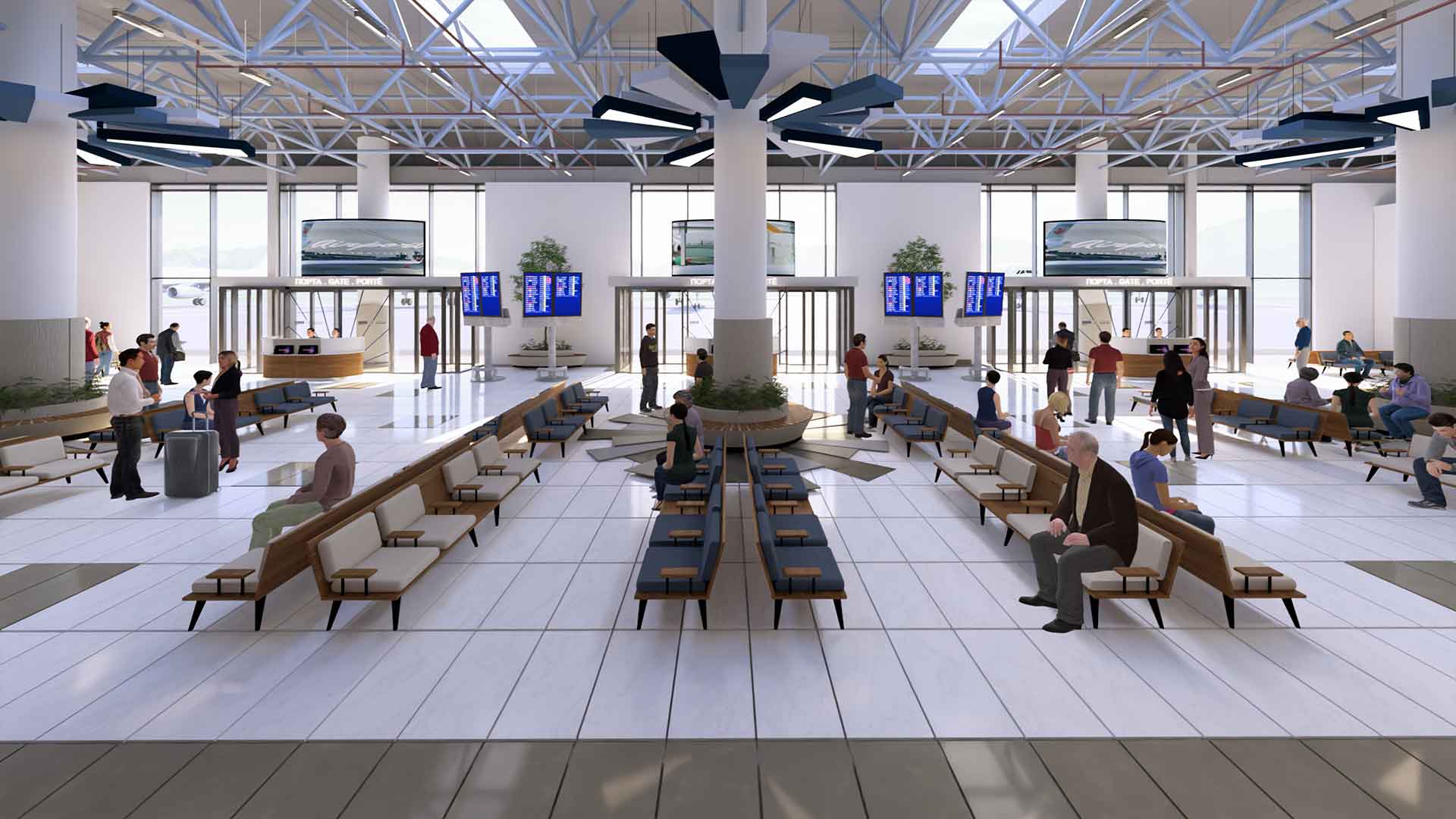
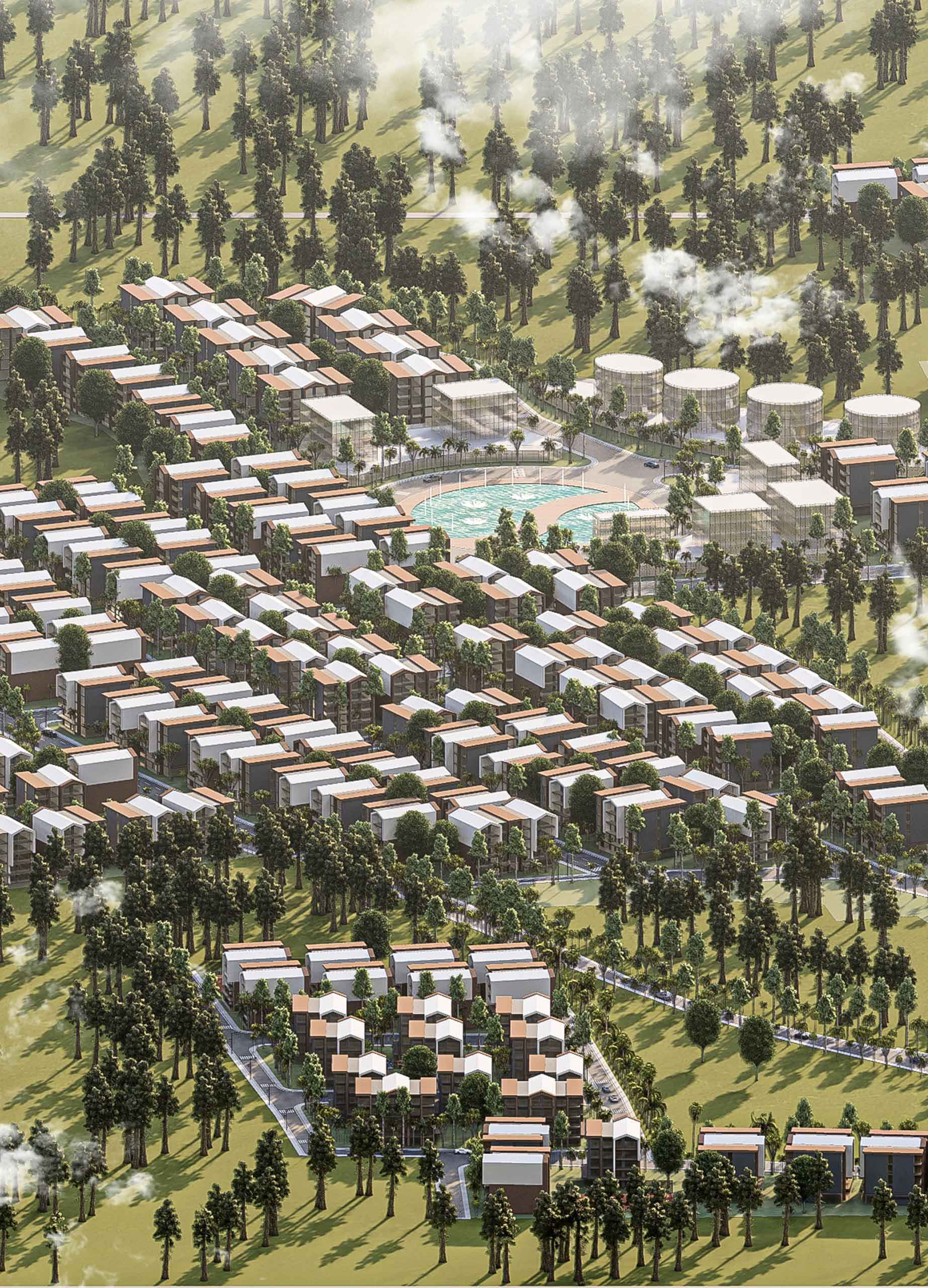
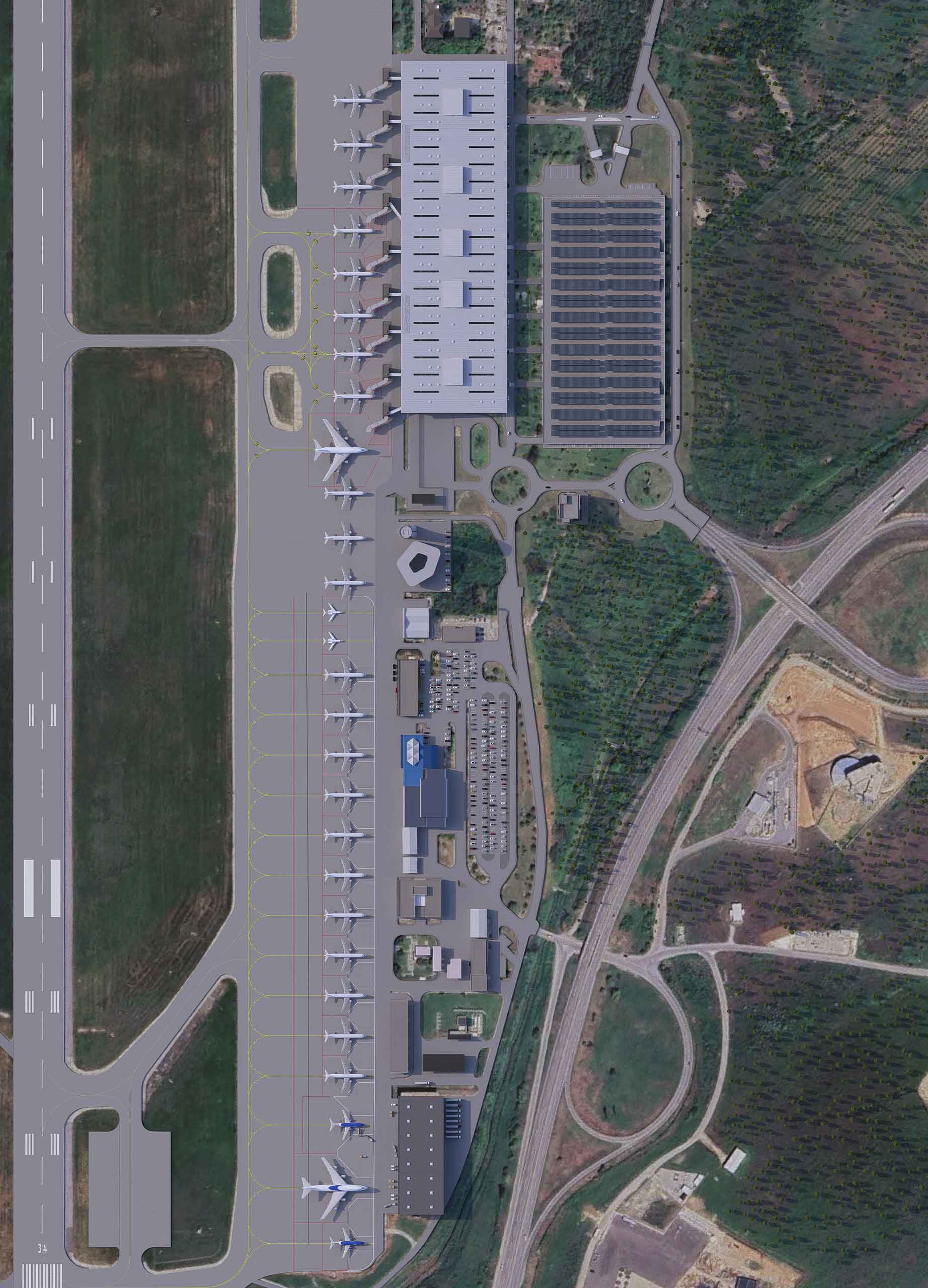
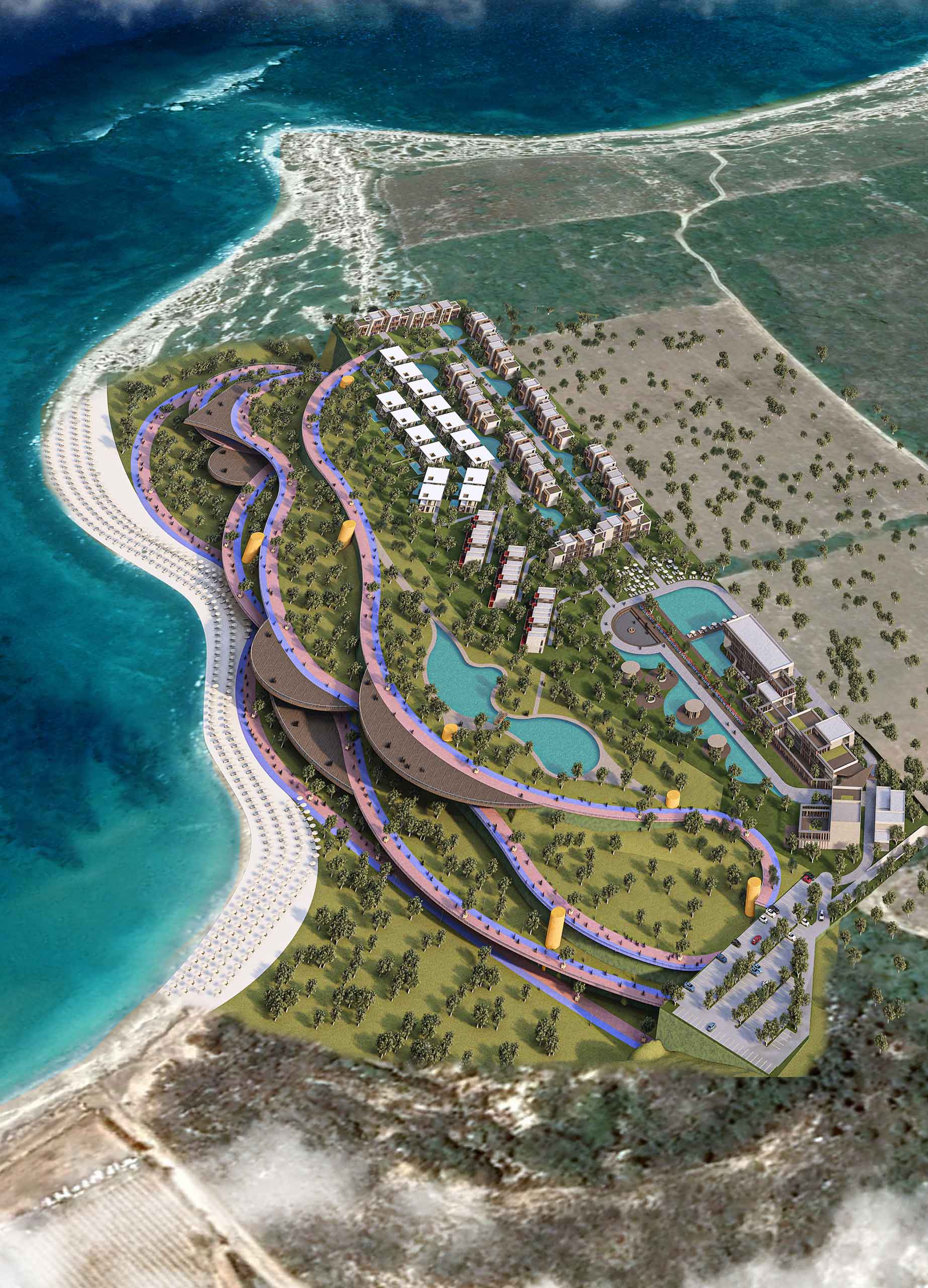
This series of visualization works for TAV Airports spans three major international projects — Skopje, Ohrid, and Almaty — supporting the planning and architectural design processes across multiple development phases.
Each stage involved a layered workflow ranging from master plan scale to architectural detail, visualizing how the airports evolved, expanded, or transformed over time.
Through a sequence of updated visuals, massing options and terminal growth scenarios were continuously assessed and refined. Beyond static renderings, the work focused on creating adaptive visual tools that accelerated decision-making and provided clarity throughout the design evolution.
Each airport required its own visual narrative — interpreting the relationship between landscape, infrastructure, and architectural identity
What we have done for,
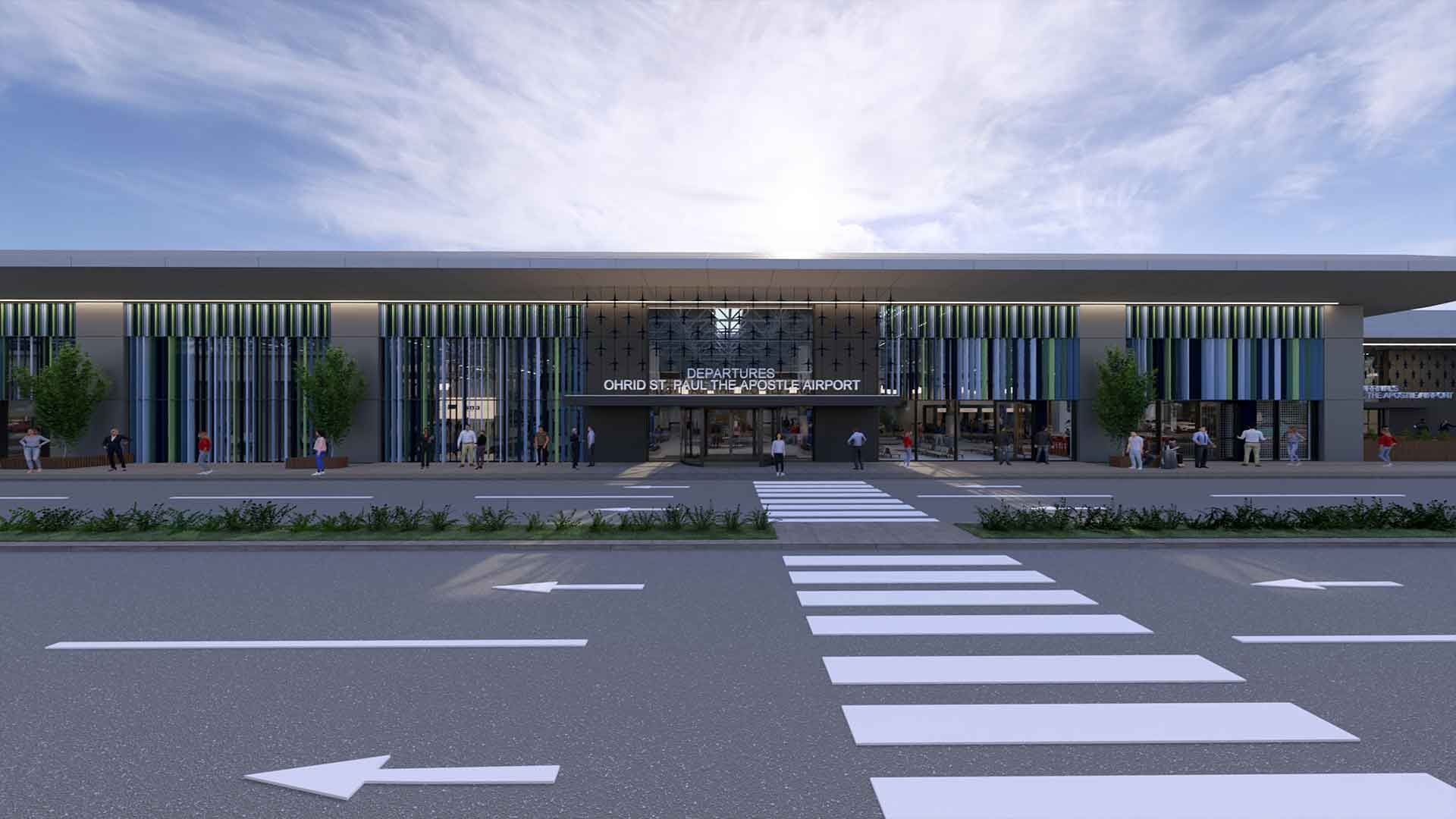
In relation to Ohrid Airport, in the context of the architectural project presented to us concerning Ohrid Airport, alongside our modeling studies of the new terminal building, we proposed several interventions for the façade that align with the concept of the spirit of the place, or genius loci.
Genius loci refers to the unique spirit or character of a place, encompassing its history, atmosphere, and cultural significance. Originating from Roman mythology, where it denoted a protective spirit of a location, the term is now widely used in architecture, urban planning, and landscape design.
A successful design respects and enhances the genius loci by integrating natural and built elements harmoniously. These interventions can be summarized as an endeavor to reflect the blue and green natural environment that characterizes the Ohrid region in the architectural structure and interior design provided to us, utilizing secondary façade elements.
These recommendations enabled us to engage with the color schemes commonly employed in contemporary airport designs, all while adhering to principles of cost-effective design.